
November 4, 2026

The short answer: A drum sander handles the demanding early stages of floor sanding, such as removing old coatings and levelling uneven timber. An orbital sander is better suited to controlled smoothing, blending and fine finishing. However, the exact process depends on the floor, machine and finish that follows.
The difference becomes clear when you see both machines at work.
A drum sander moves across a tired floor with purpose. Old coating disappears. Raised boards begin to level. Deep marks soften.
An orbital sander works with a lighter touch. It refines the surface and helps prepare it for the next step.
So, in the drum sander vs orbital sander comparison, there isn’t one winner. Each machine solves a different problem.
| Feature | Drum sander | Orbital sander |
|---|---|---|
| Main role | Strong material removal and floor levelling | Controlled smoothing and surface refinement |
| Best stage | Initial and intermediate sanding | Later sanding and finishing stages |
| Cutting action | Rotating sanding drum | Orbital or random-orbit pad movement, depending on the machine |
| Main strength | Fast work across large timber floors | Greater control during finer work |
| Main risk | Dips, waves or deep marks if handled poorly | Slow progress if used for heavy removal |
| Operator needs | Training and steady movement | Correct abrasive, speed and pressure |
These are general roles. Some professional drum sanders can also perform finer cuts, while larger orbital floor sanders may handle more than a small handheld machine.
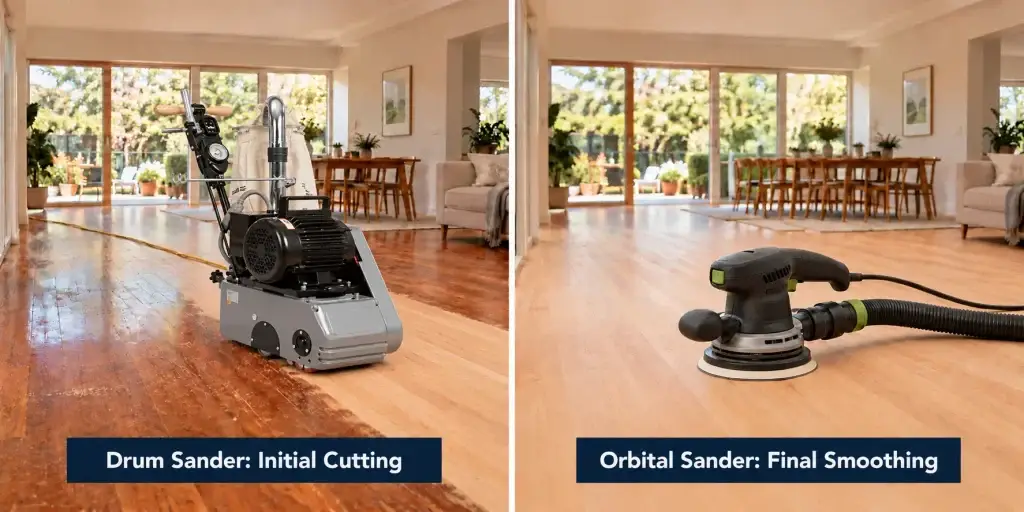
A drum sander is usually chosen when a timber floor needs serious correction.
It may be used to:
Manufacturer guidance for professional drum sanders describes the initial cut as the stage that removes old finish and major surface faults. Later cuts then remove the scratches left by that first pass.
That power demands care. The operator must keep the machine moving and raise or lower the drum at the correct time. Pausing with the drum touching the floor can leave a hollow or stop mark that becomes difficult to remove.
For this reason, a professional drum sander is not simply a larger version of a household sanding tool. It requires training, planning and close attention.
Explore Portcork’s belt and drum sanders.
An orbital sander moves the abrasive in an orbital pattern, offering more controlled surface removal. Depending on the model, orbit size and abrasive, it can help smooth scratches and refine a prepared surface.
It may suit:
For example, the Festool ETS 150/3 has a 3 mm sanding stroke and is designed for fine and extra-fine sanding. Festool advises guiding a random orbital sander with minimal pressure rather than forcing it into the surface.
That doesn’t mean every orbital sander is interchangeable. A handheld random orbital machine and a large orbital floor sander cover very different areas and work at different speeds.
Browse Portcork’s orbital sanders.
Before choosing any machine, identify:
A sanding plan should respond to the actual floor. Starting with an abrasive that is too coarse can create unnecessary work.
A drum or belt sander usually handles the first major cut across a large timber floor. This stage removes the existing finish and corrects the main surface problems.
The operator should work in a planned direction and maintain a steady pace. The correct sanding direction can depend on the floor’s condition and board layout.
Neither a large drum sander nor a standard orbital sander automatically replaces a proper floor edger.
An edger sands near walls and other areas the main floor machine cannot reach. The edge and main field must then be blended carefully so they respond evenly to stain and finish.
The next sanding stages remove the scratches left by the earlier abrasive. A professional drum or belt sander may complete these finer passes using reduced pressure and a suitable grit.
For example, an initial cut may use a coarse abrasive, followed by finer stages such as 60, 80 or 100 grit. This is only a general example. The correct starting grit and sequence depend on the coating, timber, floor condition and equipment. Avoid skipping more than one grit size in the recommended abrasive sequence.
An orbital floor machine may then help blend or refine the surface. The correct choice depends on the equipment and the planned coating system.
The final surface must be even, clean and suitable for the chosen stain, oil or coating.
Finer is not always better. Excessively fine sanding can affect how some timber floors accept stain. Always follow the coating manufacturer’s preparation instructions instead of choosing the finest abrasive available.
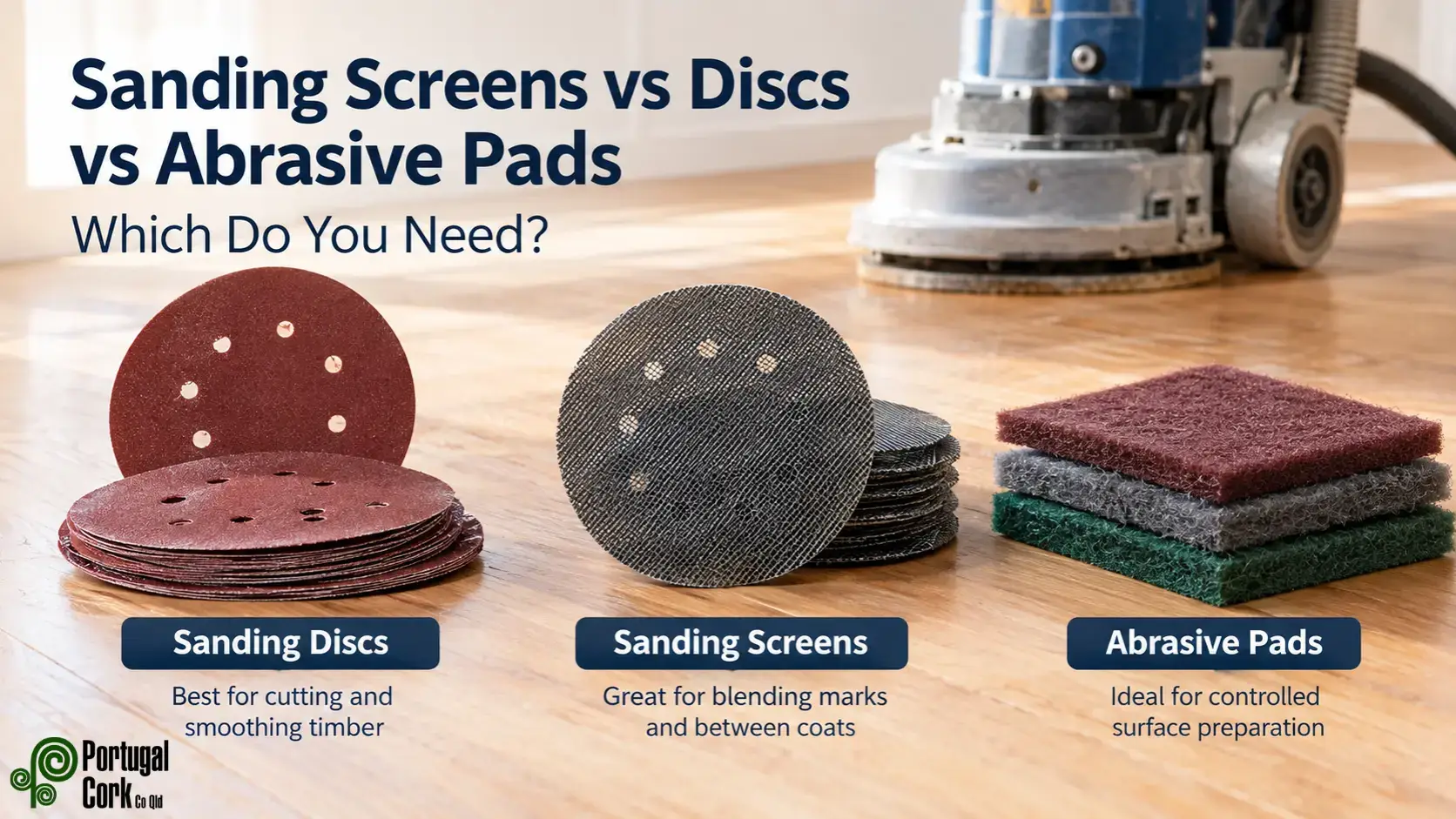
Read Portcork’s guide to sanding screens, sanding discs and abrasive pads before planning the final sanding stage.
Use this quick checklist:
Test the process in a less visible area where practical. Inspect the surface with low-angle light, as side lighting makes scratches and uneven sanding easier to see.
The drum sander vs orbital sander decision becomes easier when you stop asking which machine is better.
Ask what the floor needs next.
Choose a drum or belt sander when the surface needs strong cutting and levelling. Choose a suitable orbital sander when the floor needs controlled smoothing or refinement. Then match the abrasive and final preparation to the coating system.
Explore Portcork’s floor sanding machinery and abrasives, or contact the Portcork team with your machine model, timber type and planned finish.
It may remove a coating from a small area, but a handheld orbital sander can be slow across a full floor. A suitable drum, belt or professional floor-sanding machine is generally more efficient for major removal.
Yes. A professional drum sander can perform finer cuts when fitted with the correct abrasive and adjusted appropriately. An orbital sander may still be used for blending or further refinement.
Not every project needs both. The right equipment depends on the floor’s condition, size and finish. Large restoration jobs often use several machines, including a drum or belt sander, edger and finishing machine.