You might choose a floor while standing in a showroom. But you’ll live with it while making breakfast, moving chairs and wiping up spilled drinks.
That’s when the differences begin to matter.
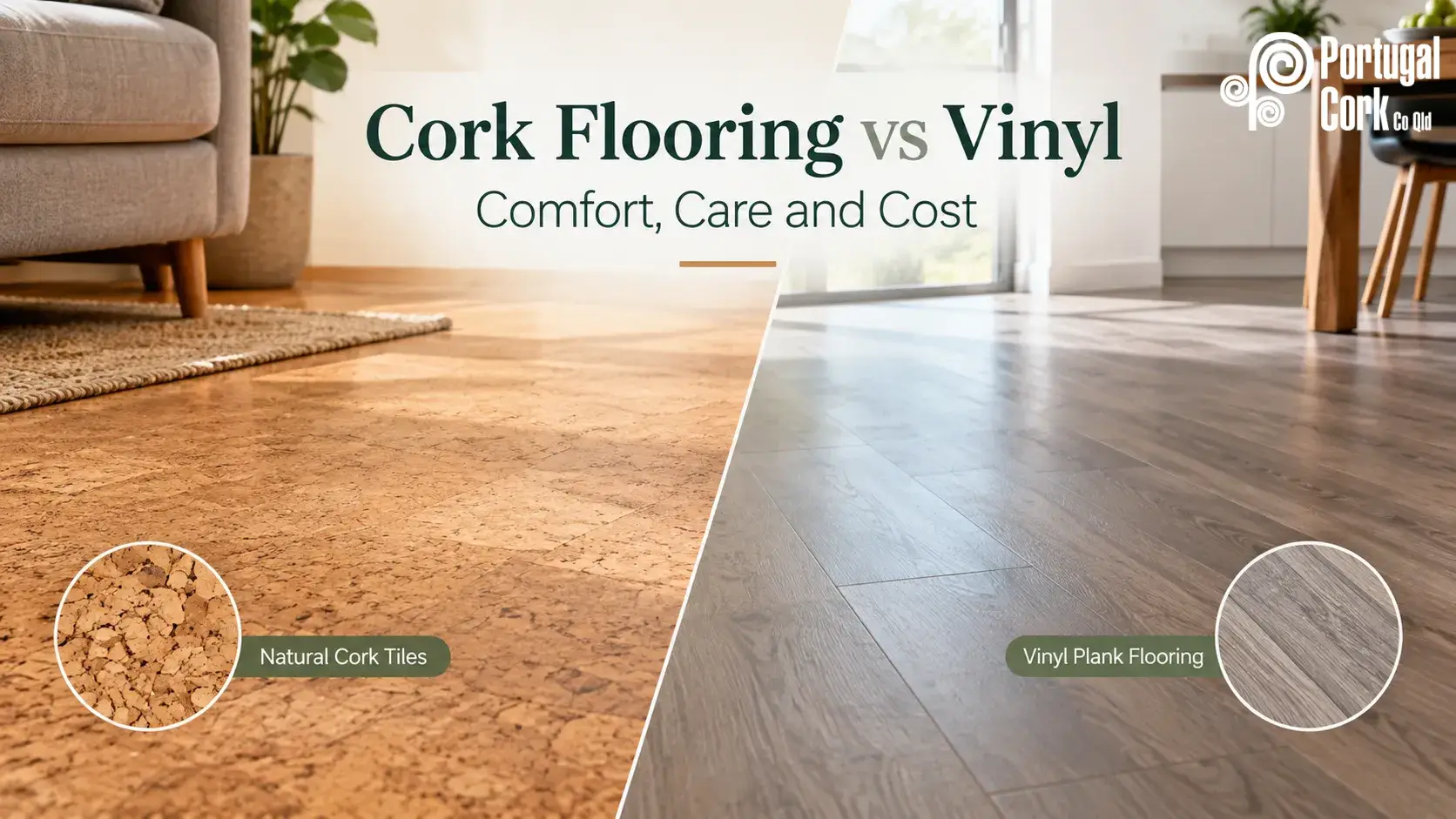
For Australian homeowners comparing cork flooring vs vinyl, appearance is only part of the decision. Comfort, moisture, wear, repairs and ongoing costs can all affect which floor suits your home.
This guide compares glue-down natural cork tiles with flexible luxury vinyl planks and tiles. Sheet vinyl and rigid hybrid boards may perform differently.
What Are You Actually Walking On?
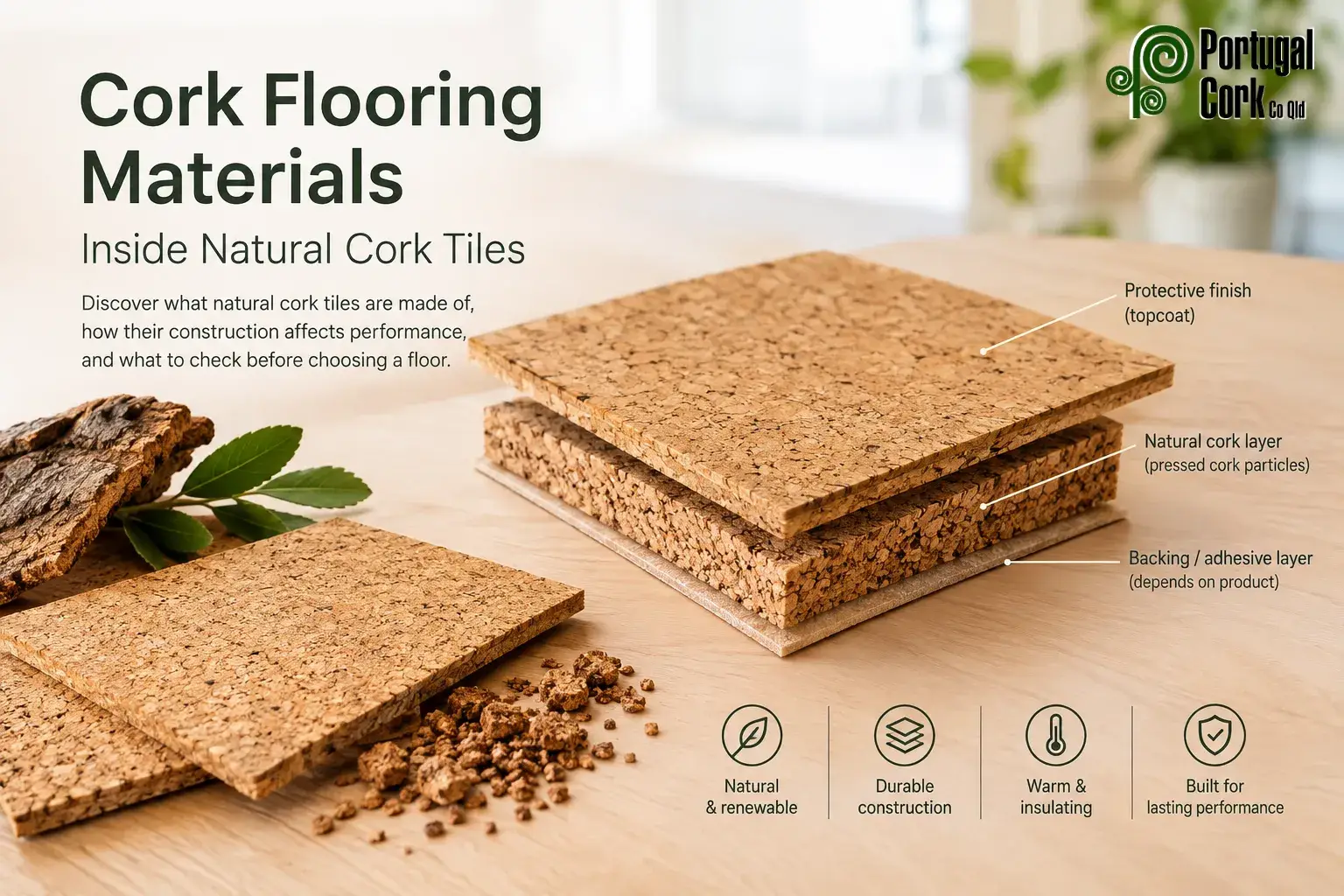
Natural cork tiles are commonly made from cork granules formed into a stable tile. Their pattern comes from the cork itself, so each tile can vary slightly in colour and texture.
Vinyl flooring generally contains PVC. A printed design sits beneath a clear wear layer, allowing the floor to copy the appearance of timber, stone and other materials.
The choice begins here: cork offers natural variation, while vinyl offers a wide range of printed designs.
For a closer look, read Portcork’s guide to what natural cork tiles are made of.
Which Floor Feels Better Underfoot?
Think about where you spend time standing. Perhaps it’s beside the kitchen bench, at a desk or in a busy living room.
Cork’s cellular structure gives it natural cushioning. It can feel warm and slightly yielding underfoot, while still providing a firm surface for daily use.
Vinyl can also feel comfortable, but the result depends on the product’s thickness, backing and subfloor. A thin plank fixed to concrete may feel different from a cushioned vinyl product.
Ask to stand on an installed sample if possible. Bending a loose sample won’t tell you how the finished floor will feel.
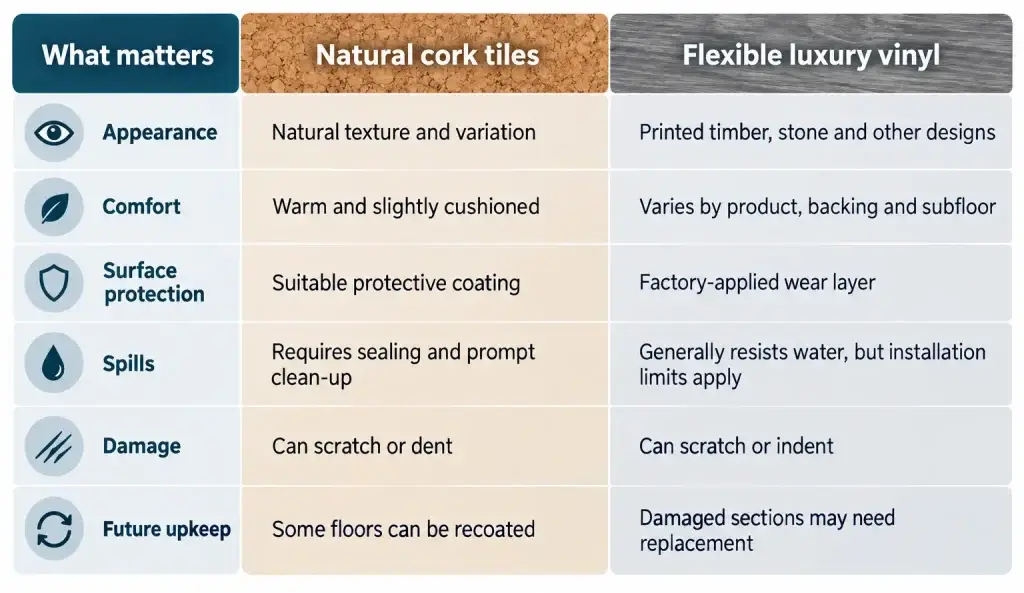
Cork Flooring vs Vinyl: A Quick Comparison
Product quality matters as much as the material name. Two cork floors, or two vinyl floors, may perform quite differently.
Cork Flooring vs Vinyl: What Happens When Something Spills?
A knocked-over glass is one thing. Water left sitting overnight is another.
Cork floor tiles need a suitable protective finish. Portcork recommends applying a polyurethane site-coat after installation to help protect the tile joints from moisture and spills. Always follow the instructions for the chosen Portcork Standard Cork Tiles and coating system.
Vinyl itself generally resists water well. However, water may still reach the joints, adhesive or subfloor if it sits for too long.
For bathrooms, laundries and other wet areas, check the exact product’s approval and installation requirements. The flooring name alone doesn’t tell you whether the whole system suits the room.
Scratch Resistance: Cork Flooring vs Vinyl
Neither material is scratch-proof.
Grit, pet claws, sharp chair feet and dragged furniture can mark both surfaces. Heavy items can also leave dents, especially when their weight rests on narrow legs.
With vinyl plank flooring, check the wear layer and intended-use rating. Total plank thickness alone doesn’t show how well the surface will resist scratches.
With cork, the type and condition of the protective coating matter. Furniture pads can also help spread weight and protect the finish.
For either floor:
- Use suitable furniture pads
- Lift furniture instead of dragging it
- Remove grit regularly
- Use mats approved for the flooring
What Happens If Part of the Floor is Damaged?
Repair options are easy to overlook until something goes wrong.
An individual cork tile may be removed and replaced without lifting the entire floor. The new tile must match the existing thickness, pattern and finish. Keeping spare cork floor tiles can make future repairs easier.
A damaged vinyl plank or tile may also be replaceable. The process depends on whether it is glued down or joined to surrounding planks. Finding an exact colour match years later may be difficult, so keeping spare material is sensible.
Long‑Term Maintenance: Cork vs Vinyl
Some cork floors can be recoated when the protective finish begins to wear. Whether further restoration is possible depends on the tile’s construction, thickness and condition. A flooring professional should inspect it first.
Vinyl can’t be sanded or recoated in the same way. If its printed surface or wear layer suffers deep damage, the affected piece will usually need replacing.
This difference can influence long-term value, not just appearance.
Compare the Whole Cost
The price per square metre is only the beginning.
Your budget may also need to include:
- Subfloor preparation
- Adhesive or underlay
- Professional installation
- Trims and transitions
- A protective coating for cork
- Spare tiles or planks
- Future recoating or replacement
Both floors need a sound, suitably dry and level base. Portcork’s cork flooring cost guide explains the costs that can form part of a cork project.
Which Floor Fits Your Household?
Cork may appeal to households that value natural texture, warmth and comfort underfoot. Vinyl may suit buyers who want a particular printed design and a factory-finished surface.
Homes with pets, children, rolling chairs or heavy furniture should look closely at scratch protection, indentation resistance and repair options before choosing either floor.
There’s no universal winner in cork vs vinyl flooring. The better choice is the product that suits the room and the way your household lives.
Explore Natural Cork Tiles
Frequently Asked Questions