May 14, 2026
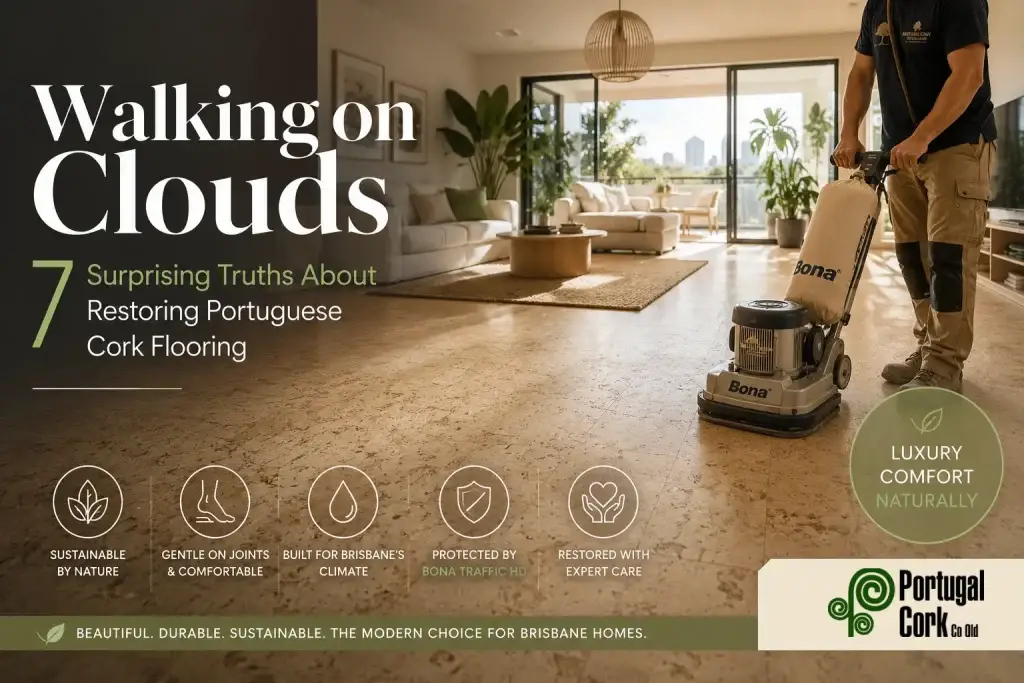
For decades, cork flooring was perceived as a relic of the “1970s orange” era—a functional but dated choice for the retro-obsessed. Today, as a specialist in sustainable restoration, I am witnessing a profound renaissance. Modern Portuguese cork has shed its vintage skin, emerging as a high-end luxury material showcased in sophisticated styles like Copenhagen, Porto, and Serra.
Refining the cellular integrity of a cork substrate is a master’s craft. It is not merely about “sanding a floor”; it is a process of resetting a living, breathing material to its honest state. Whether you are uncovering hidden treasure in a post-war Queenslander or maintaining a modern installation, this guide provides the technical grit and professional wisdom needed to transform your space.
Portuguese cork is the premier choice for the environmentally conscious homeowner because it is harvested, not felled. Unlike traditional timber, which requires the destruction of the tree, cork is gently stripped from the bark of the cork oak. This regenerative process allows the tree to continue its life cycle, naturally replacing the bark every nine years. For those of us in the restoration trade, this makes cork a “legacy material”—one that can be sanded and refinished 3 to 5 times over its life cycle, lasting decades without depleting our natural forests.
“Harvesting the cork doesn’t harm the trees, so you can enjoy your beautiful floors knowing you’re making an environmentally conscious choice.” — Sustainable Forestry Initiative
The “cloud-like” feel of cork isn’t marketing fluff; it is a result of the material’s unique honeycomb structure. This natural elasticity acts as a shock absorber, providing a forgiving surface that is significantly gentler on human joints than hardwood or tile. Beyond the bio-mechanical benefits, cork is a natural thermal regulator. For my clients in Brisbane, this is essential: cork remains cool underfoot during our sweltering, humid summers and holds a gentle warmth during the winter months, maintaining a comfortable home temperature year-round.
In the Queensland climate, cork “lives a harder life.” Because it is a living material, it expands and contracts significantly based on local conditions. A professional restoration typically requires a labor timeline of 2 to 6 days, depending on the size of the home and the ambient moisture. We carefully monitor the “application window”—ideally between 40–60% relative humidity—to prevent the coating from trapping moisture, which can lead to a “cloudy” or “blushed” finish. Sourcing materials from local specialists like Portugal Cork Queensland is non-negotiable; they ensure the product is correctly acclimatized to our unique environment before the first drum sander ever touches the floor.
The most critical technical error in cork restoration is applying a brittle finish. Because cork compresses underfoot, a rigid lacquer will inevitably fracture, leading to “chatter lines” or “crazing.” We utilize Bona Traffic HD, a 100% polyurethane water-based finish, because it is engineered to be exceptionally tough yet malleable. Crucially, it features a clear, non-yellowing formula. This is the secret to avoiding that “1970s orange” look; while older solvent-based finishes amber over time, Bona Traffic HD preserves the crisp, light aesthetic of modern styles like Copenhagen or Serra.
“100% polyurethane lacquer is the ideal finish because it is ‘tough but malleable,’ allowing it to move with the cork’s natural elasticity.” — Bona Technical Data Sheet
There is a vital distinction between a maintenance refresh and a full restoration. The “Sweet Spot” for a recoat is when you notice dullness or light surface scratches—this is a preventative service that saves you thousands. However, if you see “grey patches“, the protective barrier has failed. Moisture and dirt have penetrated the bare bark, and a simple recoat will no longer bond. At this stage, a full sand back to bare timber is required to reset the surface and prevent permanent rot.
The most common maintenance mistake I encounter is the use of a steam mop. While advertised for deep cleaning, the physics are devastating: steam forces high-pressure moisture into the grain and expansion gaps. This causes irreversible swelling, warping, and “blushing” (a whitening of the finish). To protect your investment, avoid supermarket-grade ammonia cleaners. Instead, use a Premium Cork & Timber Maintenance Kit with a pH-neutral cleaner and a barely-damp microfiber mop.
Modern Portuguese cork is a far cry from the fragile tiles of the past. Today’s iterations are engineered to be fade-resistant, water-resistant, and scratch-proof. While the material is “soft” enough to be comfortable, the high-performance layer provided by a master craftsman ensures it can withstand the high-traffic demands of a busy Brisbane household. When we refine a floor today, we aren’t just cleaning it; we are applying advanced polymer technology that rivals the durability of any traditional hardwood.
Before the sanders arrive, ensure these steps are taken to facilitate a flawless, dust-controlled finish:
Restoring Portuguese cork is more than a simple renovation; it is a “reset” for your home’s legacy. By looking past the retro stereotypes and respecting the technical realities of our Brisbane climate, you can transform a tired surface into a luxury foundation that is as sustainable as it is beautiful.
Now that you know your floors can provide both high-end comfort and an environmental legacy, which modern cork style—Copenhagen, Porto, or Serra—will define your home’s next chapter?