
October 30, 2026
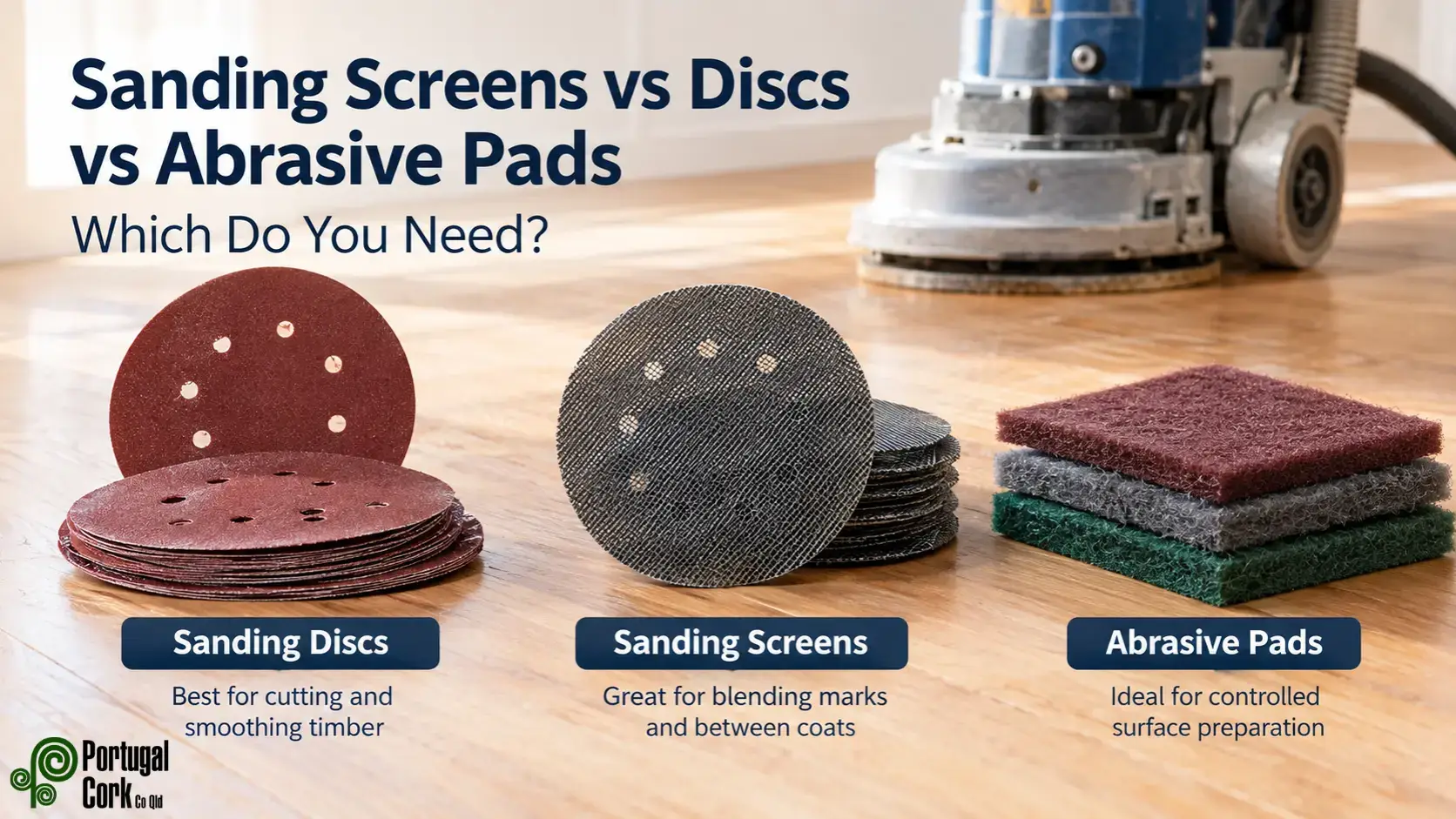
Choose sanding discs for cutting and smoothing timber, sanding screens for blending sanding marks or approved between-coat work, and abrasive pads for controlled surface preparation. The right choice depends on your machine, the floor’s condition and the coating system.
For floor sanders, installers and hands-on renovators, that last detail matters. An abrasive that works well on bare timber may leave deep scratches in a fresh coat of finish.
Before you buy, ask one question: what does the floor need next?
These names describe different abrasive formats, but their uses can overlap. Sanding screens are often disc-shaped, while some specialist pads also contain abrasive grit.
In this guide, “sanding discs” means conventional paper or cloth-backed abrasives.
The following comparison table breaks down the main differences between sanding discs, screens, and abrasive pads for timber floors to help you choose the right tool for your project.
| Abrasive | Main purpose | Typical uses | Key check |
|---|---|---|---|
| Sanding discs | Cut and smooth the surface | Sanding bare timber, removing coatings with suitable equipment, fine sanding | Grit, backing, size and machine fit |
| Sanding screens | Blend scratches and abrade surfaces | Final surface preparation and approved sanding between coats | Coating instructions and driver pad |
| Abrasive pads | Provide controlled abrasion | Between-coat preparation and specialist finishing work | Exact pad grade and approved use |
Sanding discs suit jobs that need a defined cut. Depending on the grit and machine (such as an orbital sander or floor edger), they can remove material or refine scratches left by an earlier sanding pass.
A floor edger, for example, uses suitable discs to sand near walls where the main floor sander cannot reach. Finer discs then help prepare the surface for finishing.
Portcork stocks different formats, including SIA double-sided silicon carbide discs and SIA hook-and-loop zirconia discs. Their backing and attachment methods differ, so check your machine before ordering.
No. Your final grit must suit the timber and the finish that follows.
Work through the planned sanding stages. A fine d isc won’t quickly remove deep scratches left by a coarse one. For stain work, even preparation matters across the whole floor, including the edges.
Read Portcork’s guide to avoiding patchy timber floor staining before choosing your final sanding steps.
Sanding screens have an open mesh structure. Used with a suitable machine and driver pad, they can help blend marks left by the belt sander and edger.
They can also suit sanding between coats when the coating maker approves the screen and grit.
However, screening isn’t a shortcut for flattening an uneven floor. Too much screening can wear away the softer parts of the timber, leaving shallow hollows known as “dish-out”.
The backing beneath a screen affects how it cuts. A softer setup can behave differently from a firmer one, even with the same grit.
Portcork’s White Screen Driver Pad is designed to support screens and help prevent slipping. Check the required setup rather than placing a screen under any spare pad.
Abrasive pads suit work that calls for controlled surface preparation. Some are made for sanding between coats. Others serve different tasks, so the word “pad” alone tells you very little.
The Bona Scrad System is one example of a purpose-built setup. Bona describes it as a conditioning pad used with an abrasive Scrad Wing for intermediate sanding between coats of varnish. The pad can also be used without the wing for a less aggressive cut.
That distinction matters when ordering. A pad, wing and complete system are different items.
Check the product description and grade first. Colour alone isn’t enough to confirm that a pad suits your coating or task.
Also check whether the item is an abrasive pad, a driver pad or a polishing pad. They have different jobs.
Start with the surface in front of you.
Use the right sanding machine and grit sequence for the floor. Depending on the job, you may use belts or discs first, followed by a suitable screen or specialist abrasive to refine the surface.
Follow the finish’s current Technical Data Sheet. It should guide the drying time, abrasive choice and preparation method.
Don’t assume every finish needs the same grit.
Check the finish, wear and contamination before choosing an abrasive. A light sanding pass cannot make every old coating suitable for a new one.
A worn screen may leave an uneven scratch pattern or fail to prepare the surface properly for the next coat.
Keep this short checklist beside your order:
Pro Tip: Always sweep and vacuum dust before inspecting the floor. Use a low-angle side light rather than an overhead light. Side lighting casts shadows that reveal hidden scratch patterns and uneven blending that overhead lights will easily miss.
Browse Portcork’s sanding abrasives or contact the team with your machine model, floor type and coating name. Get help choosing the right sanding discs, sanding screens and abrasive pads for your next job.
No, do not assume you can use the same abrasive for both. Cork requires its own approved sanding and finishing method. Always check the flooring, machine and coating instructions before you start.